What Tire Pressure Should I Use for Beach Driving?
Air down to 18-20 PSI. This isn't just a recommendation—it's the law in Currituck County. Driving on the beach with tires above 20 PSI can result in a citation and fine. More importantly, aired-down tires are what keep you from getting stuck.
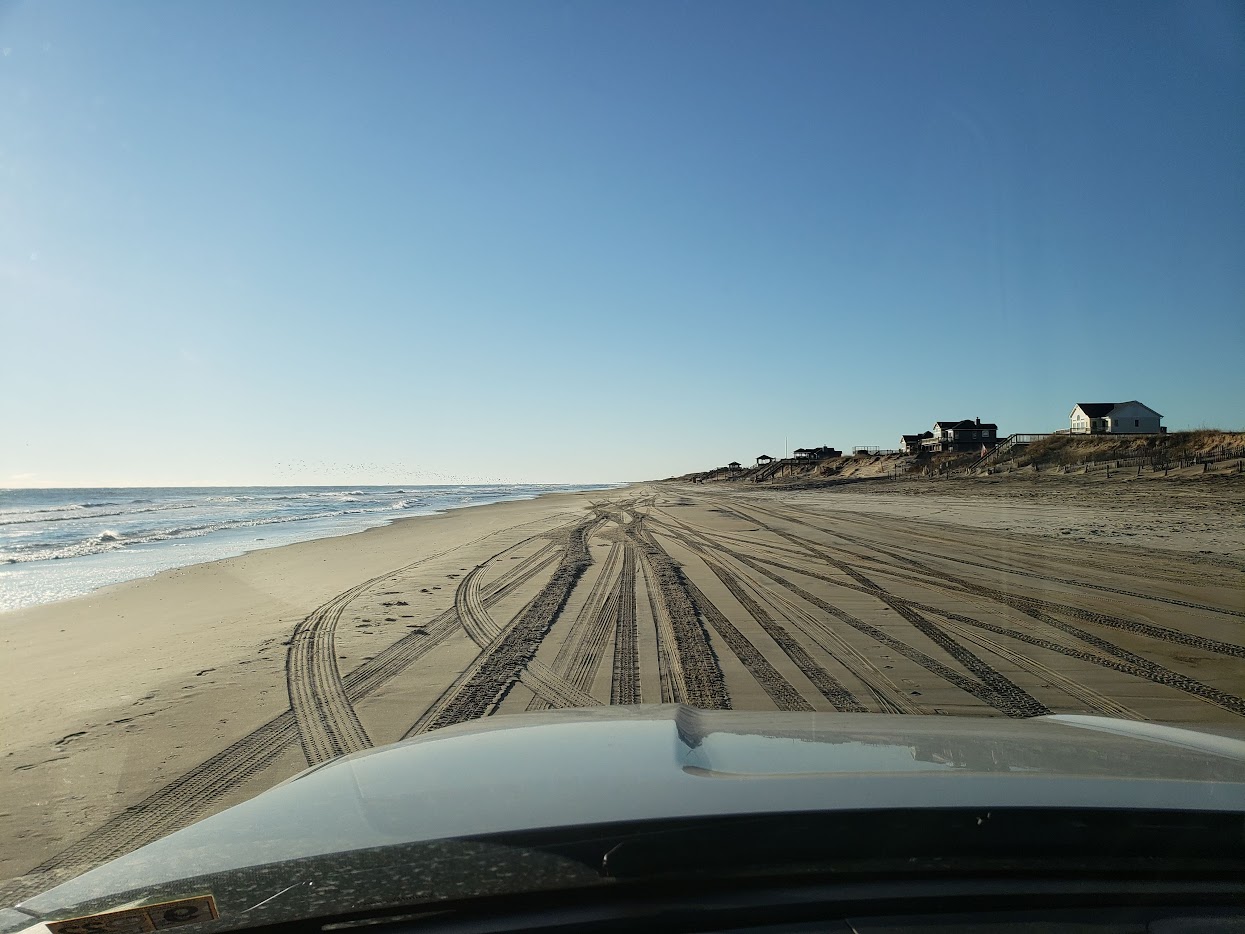
Why Air Down?
Lower tire pressure increases the tire's footprint—the amount of rubber touching the sand. This spreads your vehicle's weight over a larger area, allowing you to "float" on top of the sand rather than dig into it.
Think of it like snowshoes vs. boots in deep snow. The wider surface area keeps you on top.
The Numbers
| Condition | Recommended PSI |
|---|---|
| Standard beach driving | 18-20 PSI |
| Softer sand conditions | 15-18 PSI |
| If you start to struggle | Try 12-15 PSI |
| Legal maximum on beach | 20 PSI |
It's the Law
A 2017 Currituck County ordinance states: "No person shall drive a motor vehicle on the beach strand or foreshore with tires containing air pressure exceeding 20 pounds per square inch." Violators can be cited and fined.
Where to Air Down
Air down before you get on the beach. Don't wait until you're on the sand or on the access ramp. Good spots include:
- Historic Corolla Park: Has air stations for re-inflating when you return
- Twiddy office parking lot: Less than a mile from the 4x4 access ramp
- Any paved parking area: Near the end of NC 12
How to Air Down
- Remove the valve cap from your tire
- Press a tool (tire gauge, pen, key) into the valve to release air
- Check pressure with your gauge periodically
- Repeat for all four tires
- Replace valve caps
Tip: If you don't have a gauge, count slowly to about 50-60 while releasing air from a typical SUV tire. This usually gets you close to 18 PSI from a starting pressure of 35 PSI.
Re-Inflating
When you leave the beach and return to paved roads, re-inflate your tires as soon as possible. Driving at highway speeds on soft tires damages them and affects handling.
- Air stations: Available at Historic Corolla Park
- Gas stations: Most have air compressors
- Portable compressor: Worth having in your vehicle
Exception: If you're driving slowly (under 45 mph) to the grocery store in Corolla and coming right back, many locals don't bother airing up for the short trip.
Essential Gear
- Tire pressure gauge: Required to know your actual pressure
- Portable air compressor: Highly recommended
- Valve stem tool: Makes releasing air faster