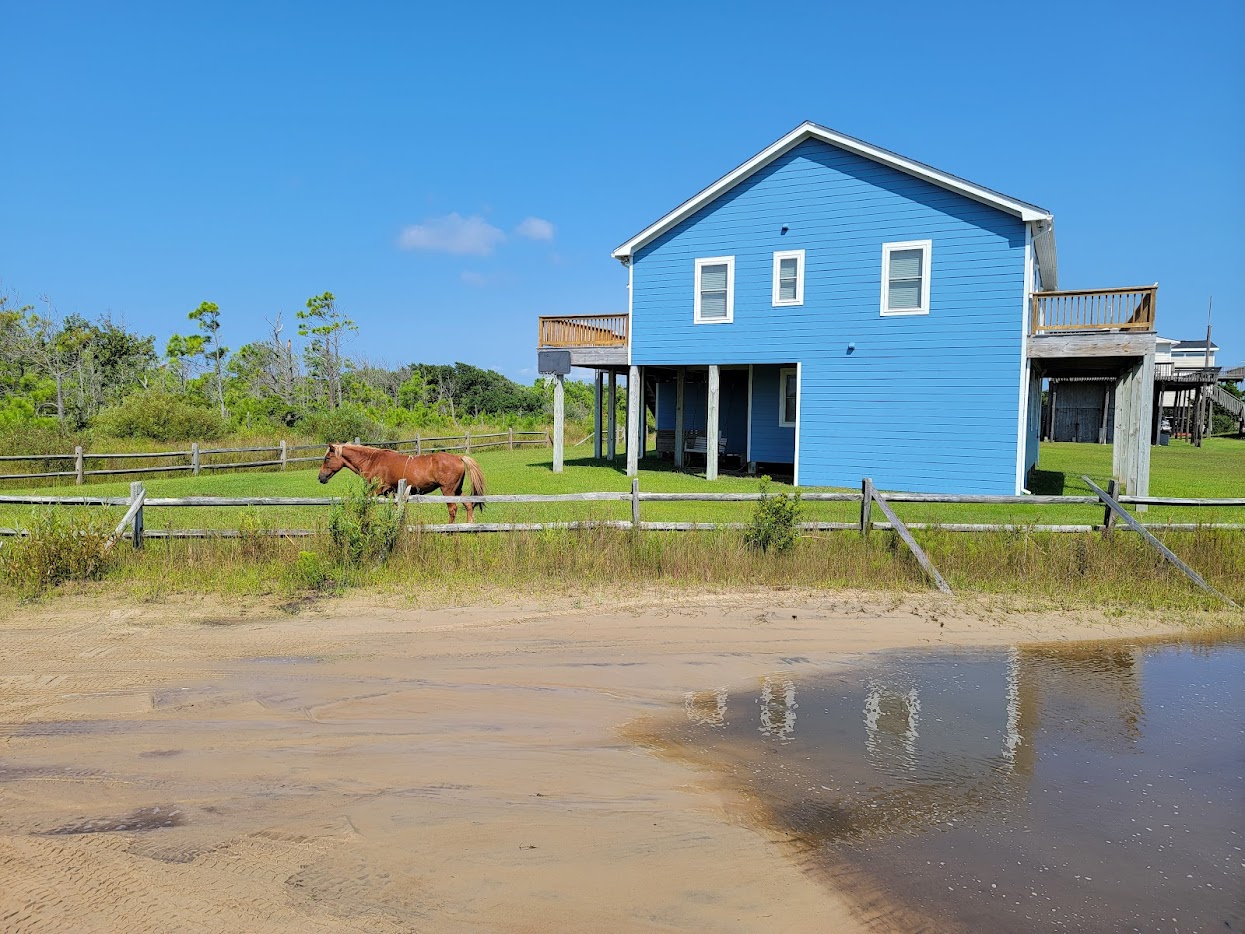
Wild Horses of Carova
Colonial Spanish mustangs that have roamed these shores for nearly 500 years—a living connection to America's earliest history.
A Safari Experience in North Carolina
Most people think of Africa when they imagine watching wild animals in their natural habitat. But here on the northern Outer Banks, you can experience something equally remarkable: wild horses living freely on the beach, just as they have for centuries.
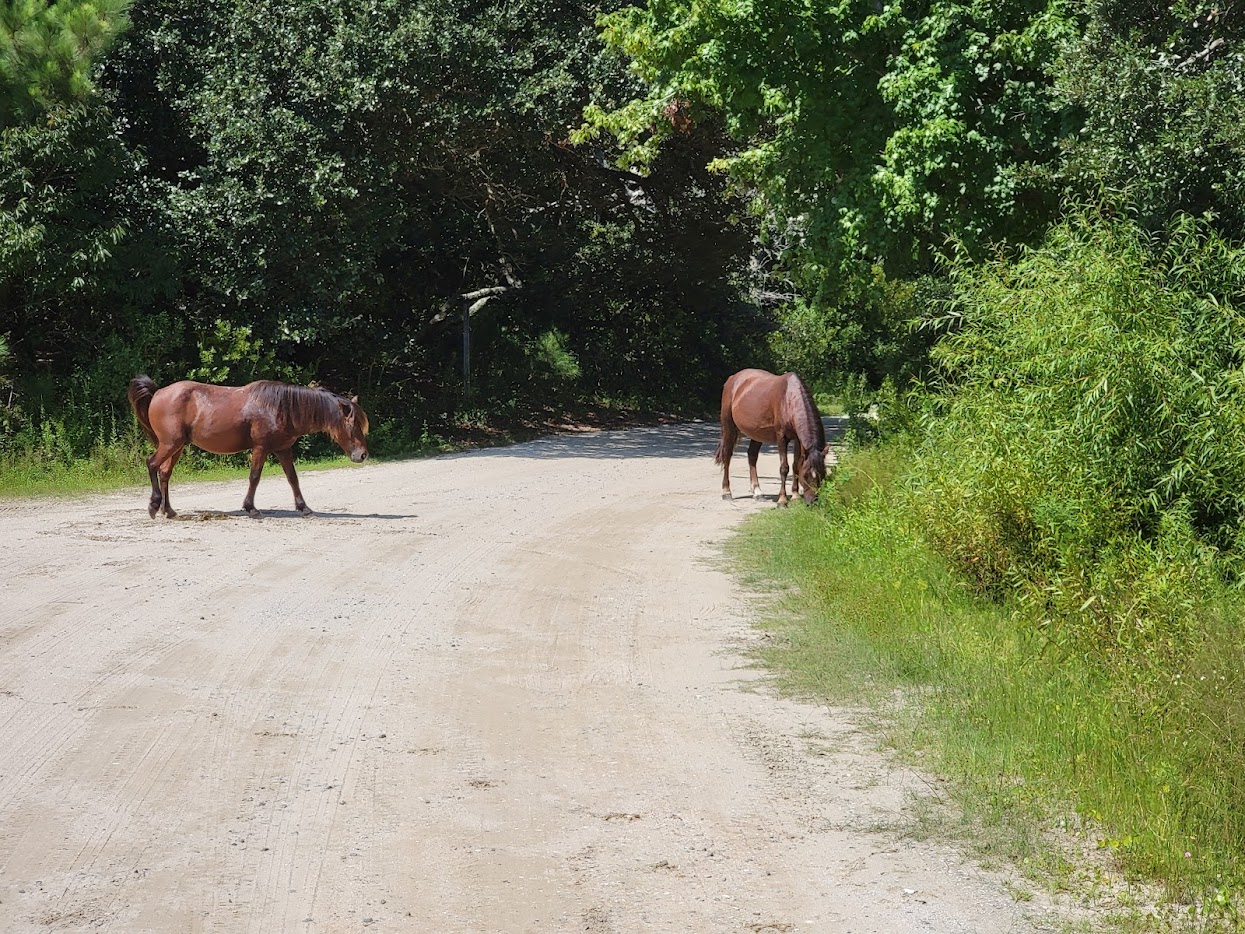
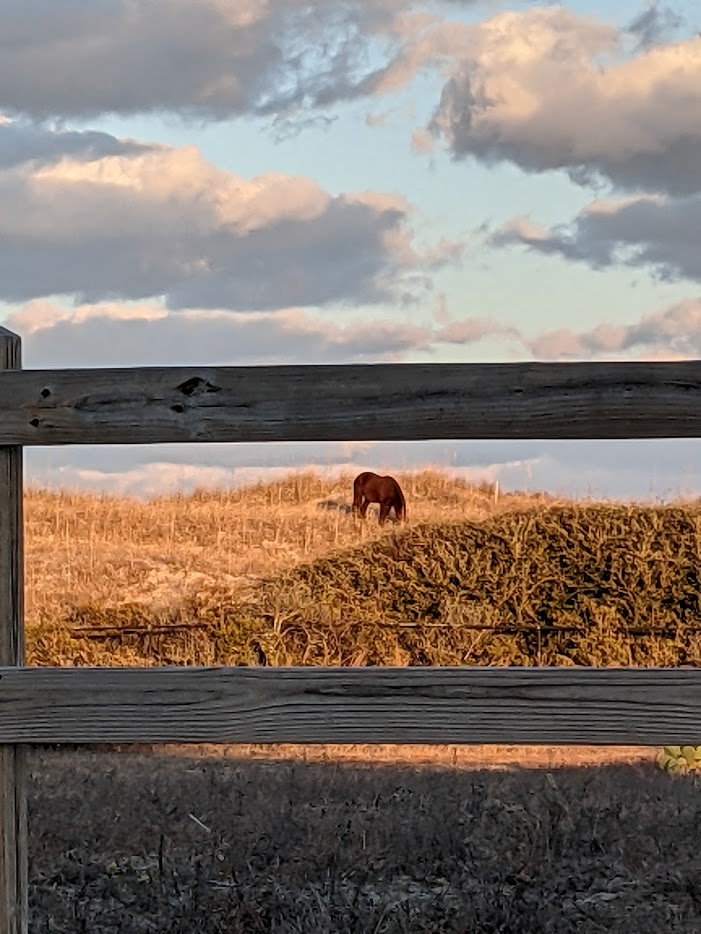
Driving through Carova, you'll encounter horses grazing in the dunes, crossing the beach, drinking from freshwater ponds, and simply living their lives as wild animals. It's an experience you won't find anywhere else on the East Coast—a true American safari.
Not Your Average Trail Ride
These aren't domesticated horses or ponies from a petting zoo. They're truly wild, born and raised on this beach, never handled by humans. Observing them requires patience and respect—which makes the experience all the more rewarding.
Fascinating Facts
Ancient Heritage
These horses are descended from Colonial Spanish mustangs brought to the Americas by Spanish explorers in the 1500s. Whether they arrived via shipwreck or were left behind by early expeditions, they've survived on these barrier islands for nearly 500 years, making them one of the oldest horse populations in North America.
Unique Genetics
The Corolla wild horses carry genetic markers that connect them directly to Spanish Colonial horses. DNA testing has confirmed they are distinct from other American horse breeds. Their smaller stature and hardy constitution are adaptations to island life—they've evolved to thrive on sparse maritime vegetation and limited fresh water.
Population
Approximately 100-120 wild horses currently live in the Carova area. The population is carefully monitored by the Corolla Wild Horse Fund to ensure the herd remains healthy and sustainable. Each horse is documented and known by name.
Band Structure
The horses live in small family groups called "bands," typically consisting of a dominant stallion, several mares, and their offspring. Bachelor stallions often form their own groups while waiting for an opportunity to establish their own bands.
Adaptations
Over centuries, these horses have adapted remarkably to their environment. They can drink brackish water that would make other horses sick. They've learned to dig for fresh water in the sand. Their hooves are harder than typical domestic horses, and they instinctively seek shelter in the maritime forest during storms.
Year-Round Residents
Unlike vacationers, the horses live here year-round, enduring nor'easters, hurricanes, summer heat, and winter cold. They're tough, resilient animals that have earned their place on this land many times over.
Viewing Tips
Spotting wild horses is one of the highlights of any Carova visit. Here's how to make the most of your wildlife encounters:
Best Times to See Horses
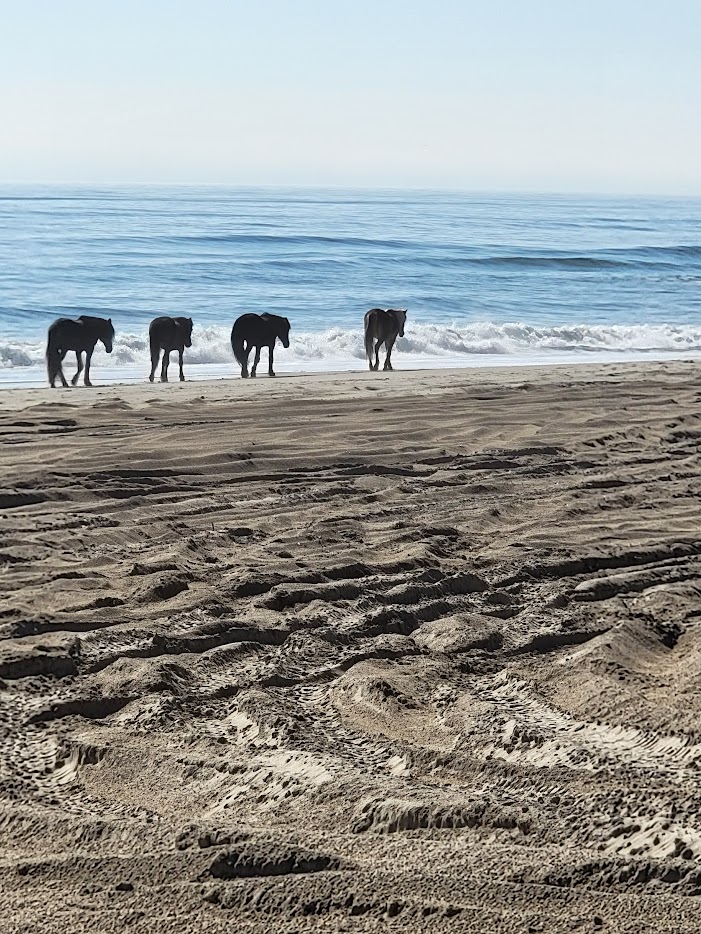
- Early morning: Horses are often on the beach at sunrise, before the heat of the day.
- Late afternoon: As temperatures cool, horses frequently return to the beach or graze in the dunes.
- Overcast days: Horses are more active when it's not blazing hot.
Where to Look
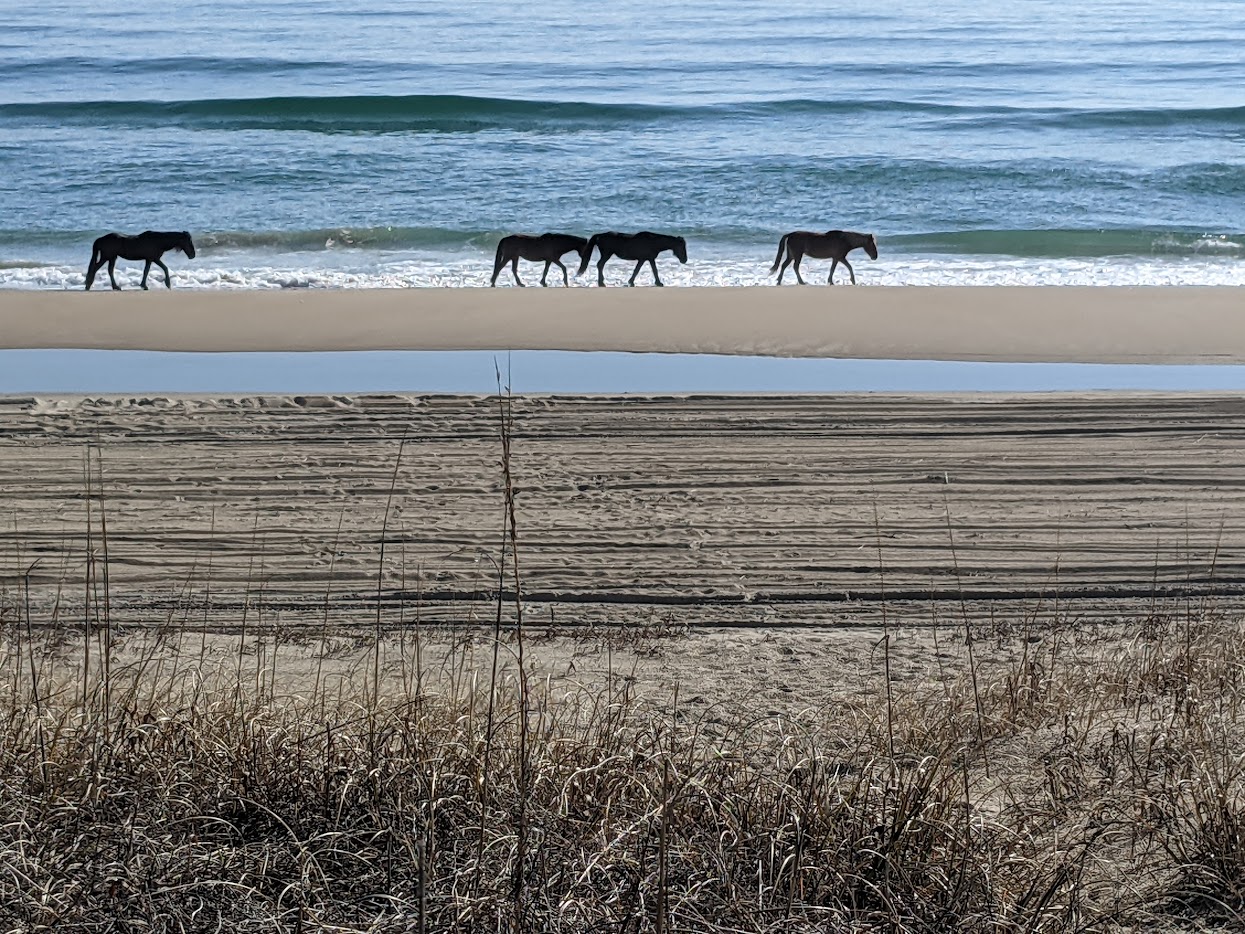
- The beach: Horses often walk along the shoreline, especially in the early morning.
- Between the dunes: Look for horses grazing in the sea oats and beach grass.
- Near freshwater ponds: Horses gather at water sources, especially in summer.
- Side streets and yards: It's common to see horses wandering through the neighborhood.
Bring binoculars. While you may get close sightings, having binoculars allows you to observe the horses in detail from a respectful distance. You'll see more natural behavior when the horses don't feel crowded.
Photography Tips
- A zoom lens (200mm+) will let you capture great shots without getting too close.
- The golden hour light at sunrise and sunset makes for stunning horse photos against the ocean backdrop.
- Be patient—the best shots come when the horses are relaxed and behaving naturally.
- Turn off your flash. It can startle the horses and is disrespectful to the animals.
Wild Horse Etiquette
Respecting these animals isn't just polite—it's the law. Following these guidelines protects the horses and ensures they remain truly wild for future generations.
The 50-Foot Rule
North Carolina law requires you to stay at least 50 feet (about the length of a school bus) from wild horses at all times. This applies to everyone—on foot, in vehicles, even on the beach. Violations can result in fines.
Never Feed the Horses
This is critically important. Human food—including apples, carrots, and other "horse treats"—can be harmful or even fatal to wild horses whose digestive systems are adapted to native vegetation. Feeding also teaches horses to approach humans and vehicles, which puts them at risk of being hit by cars.
Don't Touch or Approach
Even if a horse seems calm or curious, do not approach or attempt to pet it. These are wild animals with unpredictable behavior. Stallions can be aggressive, and any horse may bite or kick if it feels threatened. Let them come to you (from a distance) rather than the other way around.
Keep Pets Controlled
Dogs must be leashed and kept away from the horses. Horses see dogs as predators, and a chase could result in injury to the horse, the dog, or bystanders.
Yield the Right of Way
When horses are on the beach or crossing a path, stop your vehicle and wait for them to move on their own. Don't honk, rev your engine, or try to drive around them. The horses were here first.
Report Concerns
If you see a horse that appears injured, sick, or in distress, contact the Corolla Wild Horse Fund immediately. Don't approach the animal yourself—trained responders know how to handle these situations safely.
Supporting the Horses
The Corolla Wild Horse Fund is a nonprofit organization dedicated to protecting and preserving the wild horse herd. They monitor the horses' health, manage the population, rescue horses in distress, and educate the public.
If these horses touch your heart—and they will—consider supporting the Fund through a donation or by visiting their rescue farm in Corolla, where you can meet horses that have been removed from the wild herd for medical reasons.