Driving on the Beach
Everything you need to know about driving on Carova's beaches—and why it's easier than you think.
You Can Do This
Let's address the elephant in the room: if you've never driven on sand before, the idea might feel intimidating. That's normal. But here's what we want you to know: thousands of families with zero off-road experience drive to Carova every year without incident. Beach driving isn't some extreme sport requiring special skills—it's just driving, with one key difference.
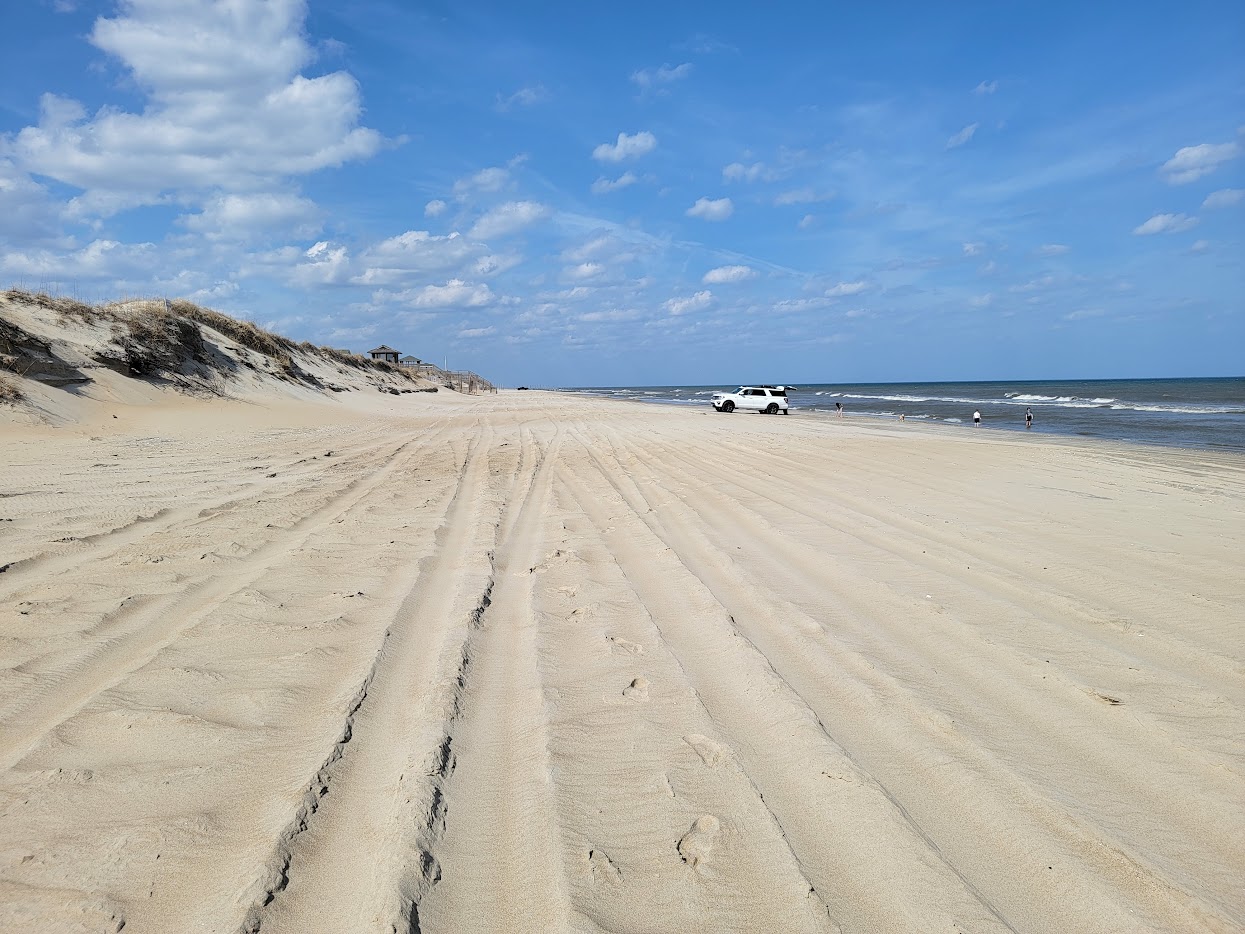
In Carova, beach driving isn't just allowed—it's the only way in. There are no paved roads connecting Carova to the rest of the Outer Banks. The beach is the road. And once you experience it, you'll understand why people keep coming back.
The Secret? It's Mostly About Air
Here's what the locals know: airing down your tires is 90% of the battle. Do that one thing correctly with a 4-wheel-drive vehicle, and sand driving is easy. We'll show you exactly how below.
Vehicle Requirements
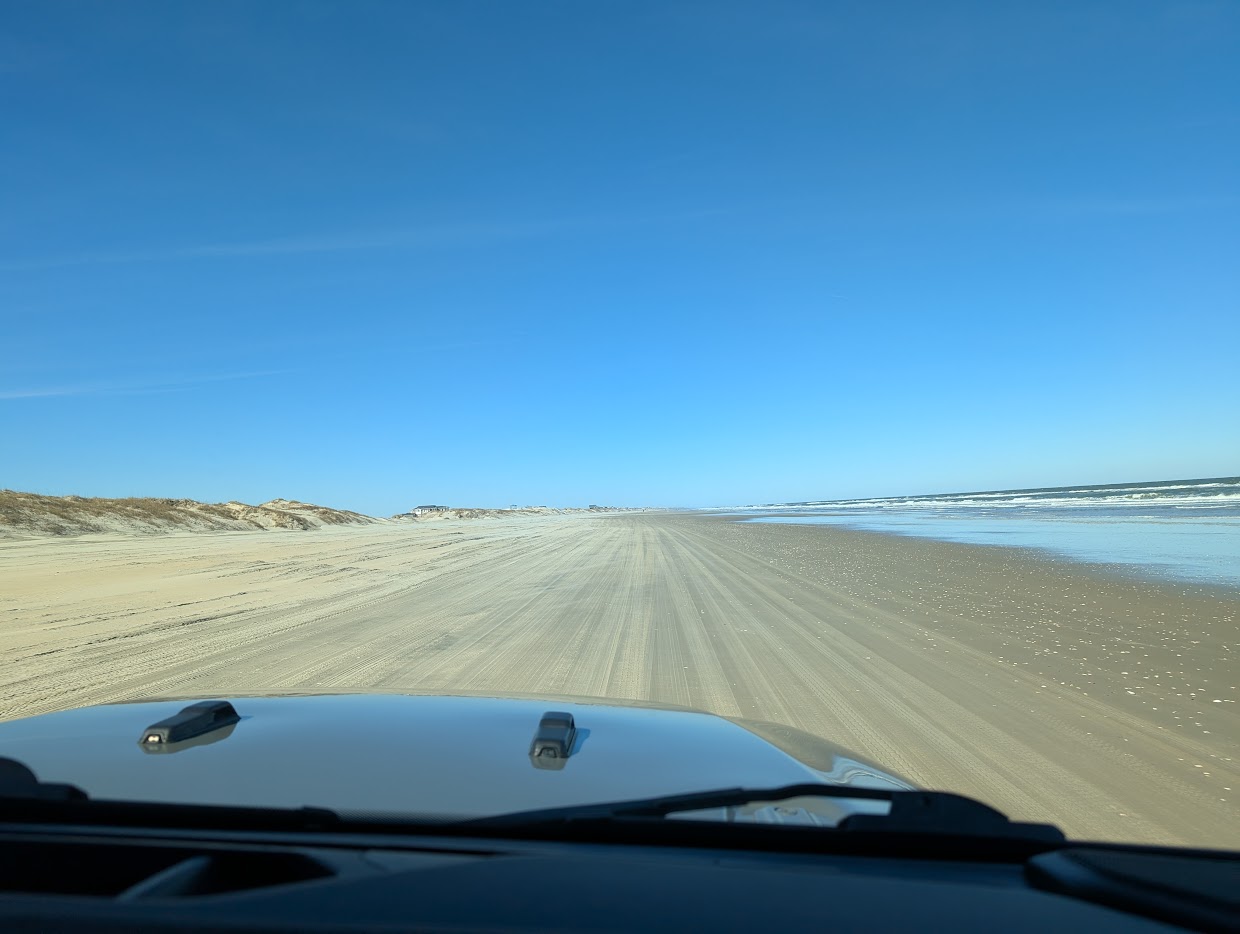
Before we talk technique, let's talk about what you need to drive on sand successfully. You do need an appropriate vehicle! If you show up in a low ground-clearnace 2-wheel drive sedan, you're likely to get stuck at some point. Bring a 4-wheel-drive SUV or truck and air-down the tires, and you'll enjoy miles and miles of open beach driving without issue.
Ground Clearance
Your vehicle needs adequate ground clearance to avoid dragging on soft sand. Especially in the summer months, the well-traveled areas of the 4x4 beaches (typically the southern end) can develop ruts that can be 6-8" deep. A vehicle that's constantly scraping the sand can bog down and get stuck. Typical SUV and truck clearance is fine.
- Minimum: 6 inches of ground clearance
- Ideal: 8+ inches of ground clearance
Most trucks, SUVs, and Jeeps meet this requirement easily. Some crossovers do too—check your vehicle's specs if you're unsure.
4-Wheel Drive
Four-wheel drive (4WD) or all-wheel drive (AWD) is considered a requirement. Realistically, people who air-down properly with a sufficient-clearance vehicle would be fine in most conditions, but if you run into especially soft or rutted sand, you could find yourself needing 4wd to power through.
A historical note: Carova old-timers talk about driving these beaches in average rear-wheel-drive sedans every day back in the 1970s. It was possible (and some still do it today) but those folks knew every inch of the sand and had years of experience. For visitors, 4WD is the way to go.
Suitable Vehicles
- Full-size trucks and SUVs (F-150, Silverado, Tahoe, Expedition, etc.)
- Mid-size trucks and SUVs (Tacoma, 4Runner, Grand Cherokee, Pathfinder, etc.)
- Jeep Wranglers, Gladiators, and similar off-road vehicles
- Crossovers with true AWD/4WD and adequate clearance (some Subarus, RAV4s, etc.)
Don't Have a 4x4?
You can rent beach-ready 4x4s from several Outer Banks rental companies. Just make sure the rental agreement explicitly permits beach driving—many standard rental agreements prohibit it. Local companies that cater to Carova visitors know the drill.
The #1 Rule: Air Down Your Tires
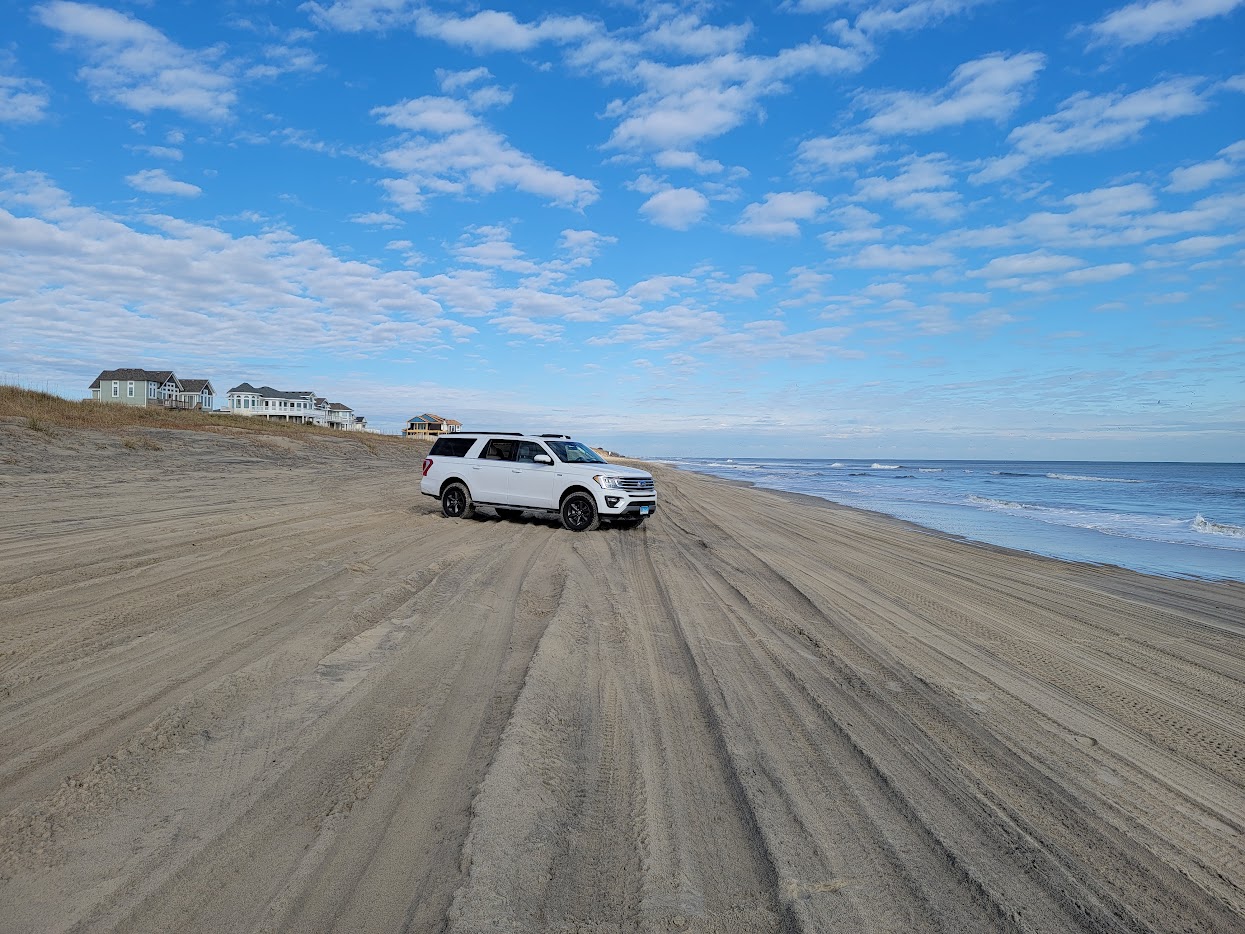
This is it. This is the thing that matters most. Airing down your tires is 90% of successful beach driving. Do this right, and driving on sand can almost feel like driving on pavement. Skip it or do it halfway, and you risk getting stuck.
Why It Works
When you lower your tire pressure, your tires flatten out and create a larger contact patch with the sand.
Instead of digging in, they float on top like a snowshoe. It's simple physics, and it's remarkably effective.
If you've ever seen a stuck car on the beach, it's probably because the driver didn't air down!
How Much to Air Down
The rule of thumb: go to about half your normal street pressure. For a typical SUV or pickup that runs 32-35 PSI on pavement, that means 16-18psi. That will be fine for most conditions.
Start at 18 PSI. If the sand is particularly soft—like near the dunes or after a storm—you can always let out more air. You can't add it back until you reach an air station (unless the house you're staying at has an air pump - some do), so err on the side of caution at first.
Where to Air Down
Important: Air down before you get to the beach entrance, not at the ramp itself. The area right before the access ramp is soft sand—the worst place to be with fully inflated tires.
Good places to air down:
- Currituck Beach Lighthouse parking area: Plenty of room, paved surface. There's an air station here for when you return.
- Ponton Lane: A side street near the access point with space to pull over.
Bring a tire pressure gauge to check your work. A simple pencil gauge from any auto store works fine. Or just look at your dash. Most recent-model-year cars will show you your tirepressures if you navigate your dash screen to the correct view.
Pro tip: To let air out quickly, use a tire deflator tool (about $15), or just press the valve stem pin with a key, small screwdriver, or even just a small rock or pebble. Check the pressure frequently as you deflate - sometimes it can go faster than you'd expect.
Turn Off Traction Control
This one surprises people, but it's important: you probably want to turn off your vehicle's traction control system (TCS) when driving on sand.
Why?
Traction control is designed to prevent wheel spin on pavement. When it detects a wheel spinning, it cuts power to that wheel. On sand, some wheel spin is normal and necessary—it's how you maintain momentum. With traction control on, your vehicle may cut power exactly when you need it most, causing you to bog down.
How to Turn It Off
Most modern vehicles have a button to disable traction control, often labeled "TCS," "TRAC OFF," or showing a car with wavy lines. Check your owner's manual or do a quick Google search for your specific vehicle (e.g., "2022 Toyota 4Runner turn off traction control"). It's usually a single button press.
Using Your 4WD System
- 4-High (4H): Use this for most beach driving. It provides power to all four wheels while allowing normal speeds.
- 4-Low (4L): Only needed if you're stuck or in extremely soft conditions. Provides maximum torque at low speeds. Keep your speed low when in this gear.
- AWD vehicles: Engage any available "sand," "off-road," or "all-terrain" mode if your vehicle has one.
Reading the Sand
Not all sand is created equal. Learning to read the beach conditions will make your driving experience much smoother.
Best Driving Surfaces
- Hard-packed wet sand: The ideal surface. Drive near (but not in) the water where the sand is firm from wave action.
- Existing tire tracks: Following tracks means the sand has already been compacted by other vehicles. When in doubt, follow the ruts.
Surfaces to Avoid
- Soft, dry sand near the dunes: This is where most people get stuck - failure to air-down your tires will show up here! The sand here is deep and loose.
- Steep inclines: When going over the dune into the back-roads, some entrances can have a steep-ish slope. It's best to take those slopes head on with a bit of momentum.
- The surf itself: You probably don't want to drive in the waves.
Sometimes the sand can be soft under water, and this is the only place where getting stuck risks a real problem.
For example if you get stuck in the surf and tide is coming in, you'll need a tow truck, fast!
There can also be hidden obstacles (in the 4x4 area in particular, the waves can hide old tree stumps), and like road-salt used in some climates, salt-water is a corrosive agent that can damage your vehicle over time. If you do get your car wet with ocean-water, a quick fresh-water rinse back at your rental is a good idea.
Tide Awareness
Check the tide schedule before heading out. At high tide, the beach narrows significantly, and you may have less room to maneuver. The best driving conditions are typically 2-3 hours on either side of low tide.
If You Get Stuck
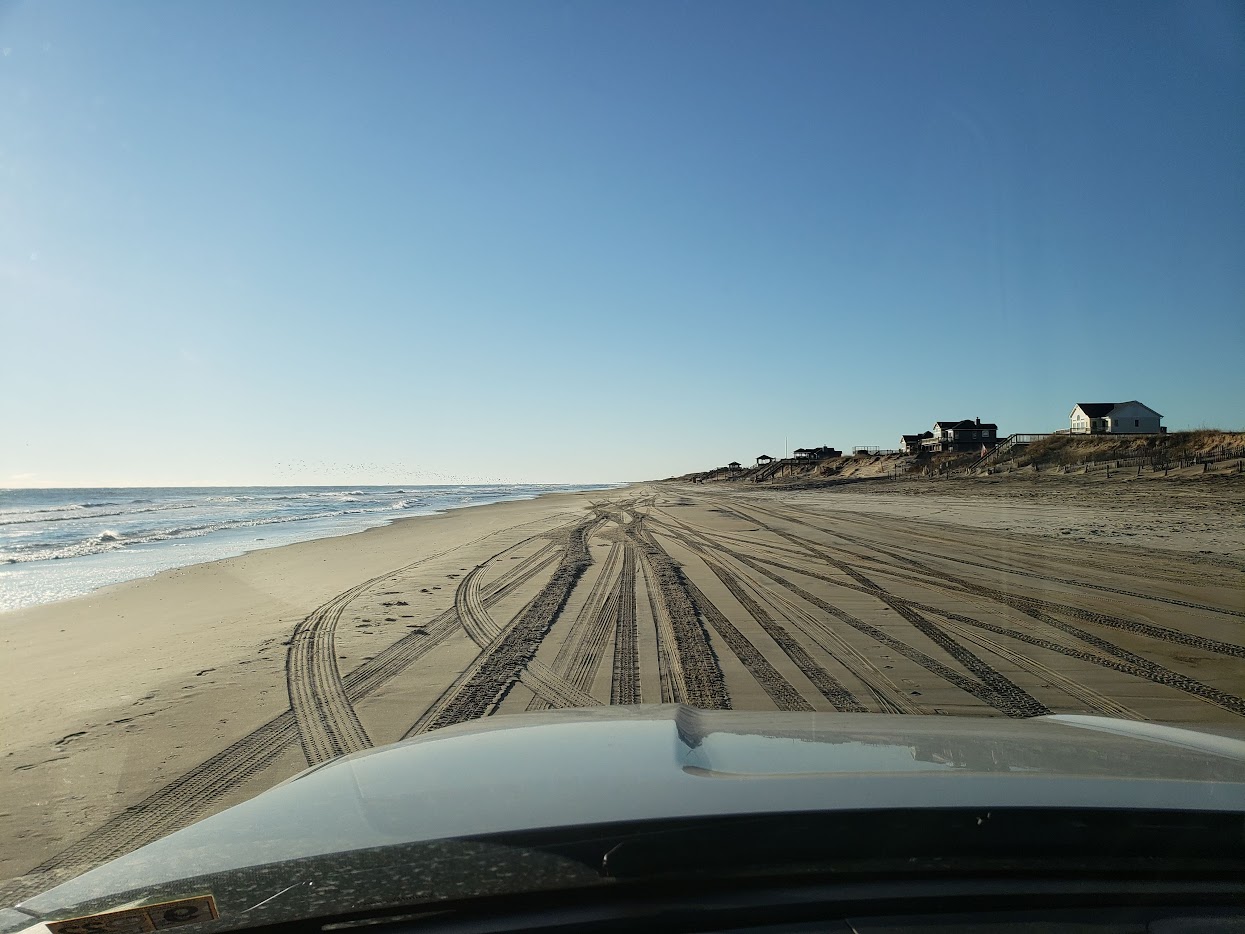
First, don't worry. It happens - and it's almost always an easy fix. Here's the honest truth: people who get stuck almost always just didn't air down enough. But whatever the reason, as long as you're not in the surf with the tide coming in, getting stuck is no big deal.
Step-by-Step Recovery
- Stop immediately. The more you spin your tires, the deeper you dig. As soon as you feel the vehicle bogging down, stop.
- Check your tire pressure. This is the most likely culprit. If you're above 18 PSI, let more air out. Even going from 18 to 15 can make a big difference.
- Clear sand from around the tires. Use your hands or a shovel to remove the sand that's built up in front of and behind each tire. You're creating a clear path.
- Try to reverse. Often it's easier to back out the way you came than to push forward through soft sand.
- Rock it gently. Shift between drive and reverse, gaining a little momentum each time. Don't floor it—gentle throttle.
The Community Will Help
Carova has a strong sense of community. If you're stuck and can't get out, wave down a passing vehicle. Someone will stop to help—that's just how it works here. And when you see someone else stuck, pay it forward.
If You're Still Stuck: Call for a Tow
It happens. No shame in it. These services specialize in beach recovery and will have you out quickly:
Save these numbers in your phone before you hit the beach. Cell service can be spotty, so it helps to have them ready.
Airing Back Up
Before driving on paved roads at highway speeds, you need to reinflate your tires to their normal pressure (check your door jamb sticker, usually 32-35 PSI).
The Air Station at Currituck Lighthouse
There's a free air station at the Currituck Beach Lighthouse parking area—the same place we recommended for airing down. It's right on your way back to the main road. Pull in, air up, and you're good to go.
Quick Trips Without Airing Up
Here's something the locals do: they make short trips on pavement without fully airing up, driving carefully.
Locals routinely drive to Food Lion or Harris Teeter in Corolla without airing back up. The key is:
- They keep speed under 45 mph—preferably under 40mph
- Take turns gently—low-pressure tires don't corner well
- They stay local—Corolla is fine, but driving too far on aired-down tires lets heat build up, which wears tires, and at the extreme, risks blow outs.
If you're at all uncomfortable with this, just air up fully at the lighthouse. It takes five minutes and removes all worry.
A Note on Tire Safety
Driving on pavement with significantly under-inflated tires at high speeds is dangerous—it can cause tire failure. The "short trip to the grocery store" exception only works for locals because they're going short distances at low speeds. When in doubt, air up!
Essential Equipment
Being prepared means driving with confidence. Here's what you should have with you:
Must-Have Items
- Tire pressure gauge: Essential for checking your PSI. A simple pencil gauge works.
- Portable air compressor: For reinflating tires. Many vacation rentals provide these, but a small 12V compressor that plugs into your vehicle is a good investment.
- Shovel: A basic square-point shovel can dig you out of most situations.
- Tow strap: In case you need a pull from another vehicle.
Nice to Have
- Traction boards: MaxTrax or similar boards provide grip when tires are spinning.
- Tire deflator: Makes airing down faster and more precise.
- Floor mats: In a pinch, your vehicle's floor mats can provide traction under stuck tires.
Many Carova vacation rentals include beach driving equipment like shovels, compressors, and tow straps. Check with your rental company before packing your own.
Other Things to Know
Speed Limits
The speed limit on the beach is 25 mph. Please respect this—there are pedestrians, children, pets, and wild horses sharing the beach with you. Slow down near houses and any time you see people or animals.
Wildlife
Wild horses have the right of way. Always. If horses are on the beach, slow down or stop and let them pass. Never approach, feed, or attempt to touch the horses. Keep at least 50 feet of distance. This is the law, and it protects both you and the horses.
Beach Permits
Currently, no permit is required to drive on the beach in Carova. However, you should check current regulations before your trip, as policies can change.
Frequently Asked Questions
No. If you air down your tires properly and stick to the hard-packed sand near the water, beach driving is straightforward. Thousands of families do it every year without incident. Air down to 16-18 PSI, turn off traction control, and you'll be fine.
Everyone starts somewhere. Take it slow on your first trip, stay on the hard-packed sand, and follow other tire tracks. After a few minutes, you'll get the feel for it. Many first-timers are surprised at how quickly it becomes second nature.
If you air down properly and stay on firm sand, your chances of getting stuck are very low. Almost everyone who gets stuck made the same mistake: they didn't air down enough. Even if you do get stuck, letting out more air and digging a bit usually gets you moving again.
Only if it's a 4x4/AWD with adequate clearance AND the rental agreement permits beach driving. Many standard rental agreements prohibit off-road use, so check carefully. Local Outer Banks rental companies often offer beach-ready 4x4s specifically for Carova visitors.
High tide narrows the drivable beach, but it's not dangerous if you plan ahead. Check the tide schedule and avoid traveling during peak high tide if you're not comfortable. The beach never completely floods—there's always a passable route, though it may require driving slower and closer to the dunes in some spots.
Salt can cause corrosion over time, but a single beach trip won't harm your vehicle if you rinse it afterward. Most Carova rentals have outdoor showers or hose hookups. Focus on the undercarriage and wheel wells. An occasional beach drive with a good rinse afterward is completely fine.
It's strongly recommended. Traction control systems cut power when they detect wheel spin, which is exactly what you don't want in sand. Some wheel spin is normal and necessary to maintain momentum. Most vehicles have an easy button to disable it—check your manual or Google your specific vehicle.
Quick Reference Checklist
Before You Hit the Sand
- Air down to 16-18 PSI at the lighthouse or Ponton Lane
- Engage 4WD (4-High for most driving)
- Turn off traction control
- Have a shovel, tow strap, and pressure gauge accessible
- Save tow service numbers in your phone
- Check tide schedule
While Driving
- Stay on hard-packed sand near the water
- Follow existing tire tracks
- Avoid soft sand near dunes
- Keep speed under 25 mph
- Give horses the right of way
If You Get Stuck
- Stop—don't spin your tires
- Let out more air (try 14-15 PSI)
- Dig sand away from tires
- Try reversing out
- Wave down help or call a tow service
When You Leave
- Air back up at the lighthouse station (free)
- Or: drive slowly (<45 mph) to Corolla stores without airing up, then return
- Rinse vehicle undercarriage when convenient